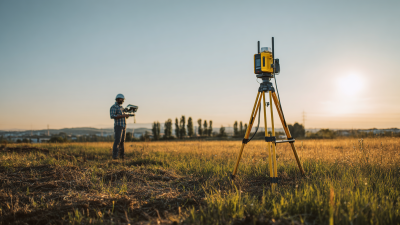
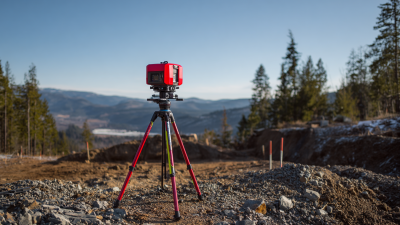
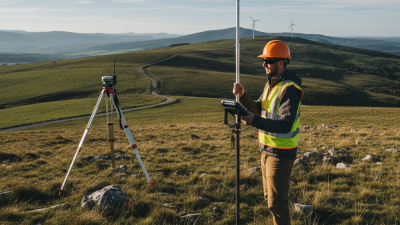
In the fast-changing world of surveying and mapping, having high-precision tools really can’t be ignored. So, if you look at the latest reports from MarketsandMarkets, they’re saying the global GNSS industry is set to hit around $220 billion by 2026. That’s a pretty clear sign that there’s a growing buzz around reliable Gnss Rtk Base Station tech for all sorts of precise work. Companies like Topcon and Trimble have been pushing the envelope with innovations that actually make surveying faster and more efficient. Honestly, their advancements are really changing how pros think about mapping projects.
These GNSS RTK Base Station systems are super important across different fields—whether you’re working on construction sites, farms, or even urban planning. They give real-time positioning data that’s accurate down to centimeters. For example, a recent report from Research and Markets pointed out that having precise positioning can really cut down on project costs. But here’s the thing—while these tech improvements are amazing, we still need to stay aware of their limits. Signal interference, for instance, can sometimes throw things off without warning, so it’s always smart to balance relying on technology with good old-fashioned field know-how.
That said, jumping into using GNSS RTK Base Stations isn’t perfect. Even with all the advancements, you gotta understand the specific conditions of each site. It’s important for users to stay involved and aware of what’s happening around them to make sure their measurements stay reliable. As the industry keeps growing, chasing precision is great, but it’s equally important to keep a realistic view of what the technology can and can’t do.

Overview of GNSS RTK Technology and Its Applications
The Global Navigation Satellite System (GNSS) RTK technology has revolutionized precision surveying and mapping. The basic principle of RTK is to utilize signals from satellites to provide real-time positioning with centimeter-level accuracy. This technology is crucial in various industries including construction, agriculture, and geospatial applications. According to a recent market report, the GNSS market is expected to reach $32 billion by 2027, indicating a strong demand.
Applications of GNSS RTK extend beyond simple mapping. In agriculture, it enables farmers to optimize their field operations. For example, fields can be plowed, seeded, and fertilized more accurately. A report by the American Society of Civil Engineers highlights that RTK can decrease operational costs by up to 30% in urban construction projects. However, challenges remain in signal interference and the need for a reliable base station.
Moreover, while Gnss Rtk Systems offer significant advantages, they require substantial investment. Users must weigh the benefits against costs. Accuracy can be affected by environmental factors such as trees and buildings. This aspect is critical for professionals relying on precise measurements. Understanding these limitations is essential for effective implementation ofGnss Rtk Base Station technology.
GNSS RTK Application Growth in Different Industries
This chart illustrates the market share of GNSS RTK technology across various industries, emphasizing its growing significance in sectors such as agriculture and construction.
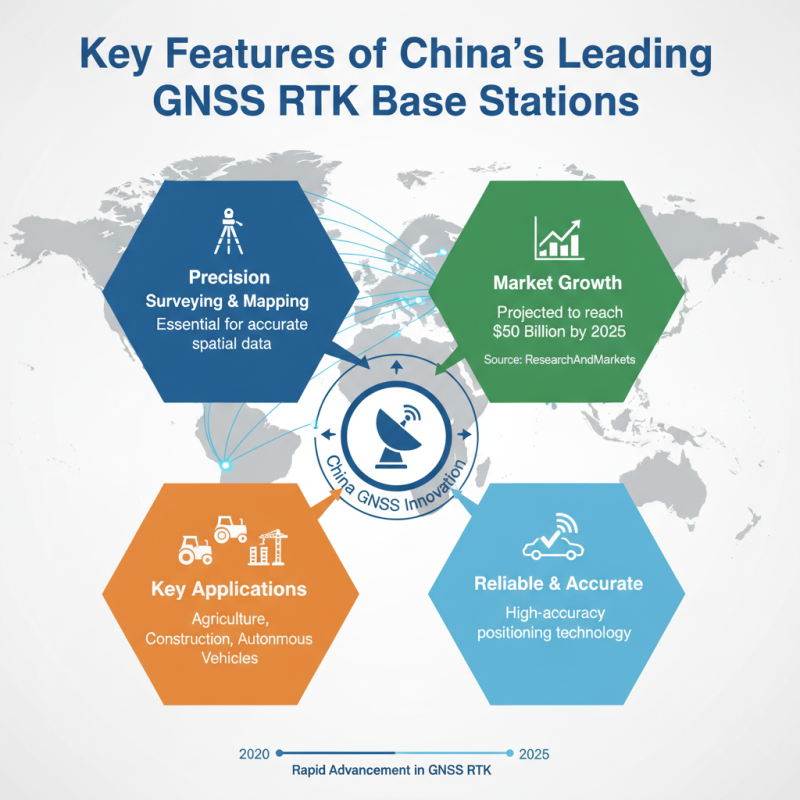
Key Features of China's Leading GNSS RTK Base Stations
China is rapidly advancing in the GNSS RTK base station market, essential for precision surveying and mapping. According to a recent report by ResearchAndMarkets, the GNSS market is projected to reach $50 billion by 2025, driven by demands in agriculture, construction, and autonomous vehicles. This trend highlights the importance of reliable and accurate positioning technologies.
Key features of China’s leading GNSS RTK base stations include high-precision positioning and robust signal reliability. Many stations offer centimeter-level accuracy. Additionally, they are designed with multi-frequency technology, which enhances performance in challenging environments. Reports indicate that systems with dual or triple-frequency capabilities can achieve significant performance improvements, especially in urban areas.
Despite these advancements, challenges remain. Signal interference from urban infrastructure can impact reliability. Moreover, the need for continuous updates and maintenance is critical to ensure operational efficiency. As the market evolves, ongoing investments in research and development are essential to address these issues and enhance the overall reliability of GNSS technology in surveying applications.
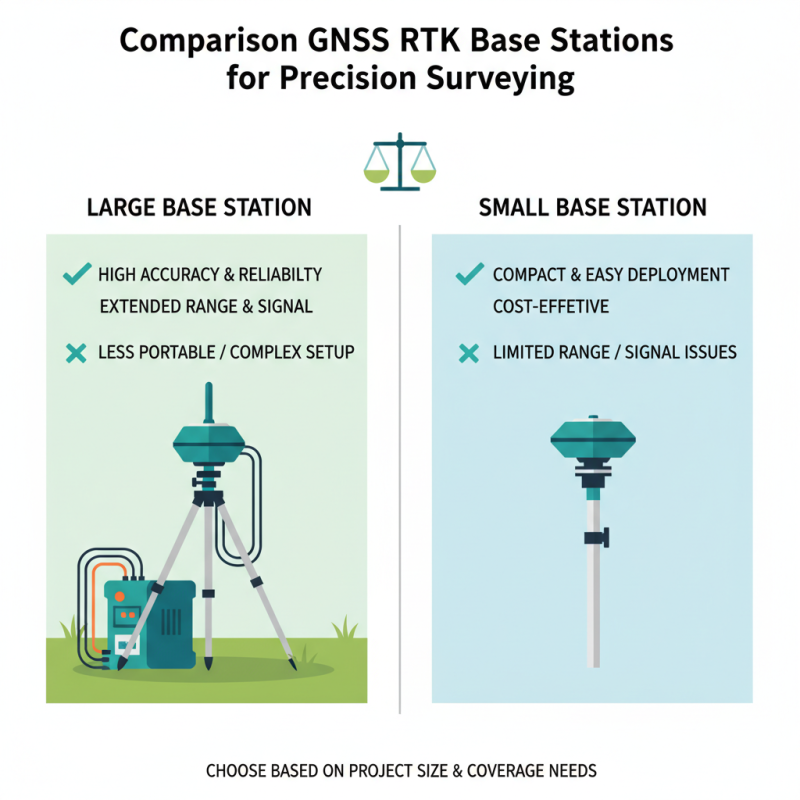
Comparison of GNSS RTK Base Stations for Precision Surveying
When considering GNSS RTK base stations for precision surveying, several important factors come into play. The accuracy and reliability of the system are crucial. Users often seek small GNSS base stations for RTK applications due to their compact design and ease of deployment. However, the trade-off sometimes lies in their range and signal strength. A smaller unit may struggle with coverage in larger areas, which can impede data collection.
Comparing different models requires careful analysis of their specifications. Some base stations offer advanced features like real-time corrections or integrated communication systems. Yet, not all systems perform equally under various environmental conditions. Weather, obstructions, and even interference can affect performance. It’s essential to examine real-world user feedback on these issues. Understanding their limitations helps in making a more informed decision.
Many professionals find that a smaller base station is not always the best solution. While portability is an advantage, users must consider the operational environment. In densely-built areas, a compact design might lead to challenges in satellite visibility. Each project is unique, and the choice of equipment should align with specific survey requirements. Balancing portability and performance is key to successful precision surveying.
Market Leaders: Top Manufacturers of GNSS RTK Base Stations in China
The GNSS RTK base station market in China has seen significant growth, driven by increasing demands in precision surveying and mapping. In 2022, the market was valued at approximately $2.5 billion, with projections suggesting a compound annual growth rate (CAGR) of about 12% through 2028. This reflects a rising interest from sectors like agriculture, construction, and urban planning.
Among the key players in this space, manufacturers focus on enhancing accuracy and reliability. A report from the Global Navigation Satellite System Association highlights that RTK systems can achieve centimeter-level precision, essential for high-stakes applications. Many companies invest heavily in R&D to innovate their technologies, yet some challenges persist. For example, signal disruptions caused by environmental factors can still impact performance, revealing a need for improved robustness in certain models.
Market leaders often emphasize user experience and operational ease. While advancements have been made, there’s still room for improvement, especially in training professionals to maximize these tools’ potential. The balance between technology and user proficiency remains crucial for the industry's growth trajectory.
Case Studies: Successful Implementations of GNSS RTK in Mapping
The implementation of GNSS RTK technology in mapping has proven effective in various case studies. For instance, a recent project in rural areas of China utilized GNSS RTK base stations to map land precisely. This improved land management and reduced disputes between landowners. According to industry reports, the accuracy offered by GNSS technology can reach up to 2.5 centimeters. This level of precision is crucial for legal land demarcation.
In a notable study, city planners integrated GNSS RTK solutions into urban development projects. The results showed significant time savings in data collection and mapping. Areas that typically required weeks for surveying were completed in days. However, challenges remain. Chief among them is the dependency on a strong satellite signal, which can be affected by obstructions like tall buildings. This limitation raises questions about the reliability of using Gnss Base Stations in densely populated areas.
Some projects reported inaccuracies due to environmental factors. Reflections from buildings and interference from noise can lead to errors. Continuous advancements in GNSS technology may address these issues, yet they require ongoing evaluation. Overall, case studies illustrate that while GNSS RTK base stations deliver impressive results, project planners must remain vigilant about potential setbacks in their implementations.
Future Trends in GNSS RTK Technology and Precision Surveying
The future of GNSS RTK technology looks promising for precision surveying and mapping. As the demand for accurate data grows, advancements in this field are crucial. Innovations such as multi-frequency signals and improved algorithms are emerging. These changes enhance signal reliability even in challenging environments. Users will likely notice reduced latency and improved precision, which are essential for many applications.
However, there are still challenges to address. The integration of various GNSS constellations needs to be seamless. Interference from urban structures can significantly impact performance. Moreover, the need for skilled operators remains. Training programs must keep pace with technological developments. As tools evolve, so must the knowledge base of users. Collaboration between experts can foster growth.
Data security will also be a concern. As GNSS technology becomes more integral, its vulnerabilities may be exposed. Ensuring reliable and accurate performance requires continuous improvements and assessments. Embracing these changes will be key to keeping up with industry demands.
Nevertheless, the potential for transformation is significant. These trends shape a more efficient future for surveying professionals.
Challenges and Solutions in Using GNSS RTK Base Stations
The use of GNSS RTK Base Stations in precision surveying faces significant challenges. One major issue is signal interference. In urban areas, buildings can block or degrade signals. A study found that up to 30% of signal accuracy can be lost in crowded environments. This interference complicates reliable data collection and slows project timelines.
Another challenge is equipment calibration. RTK systems require regular adjustments to maintain accuracy. A report by the Geospatial Industry Foundation noted that improper calibration can lead to errors exceeding 10 centimeters. This magnitude of inaccuracy can be critical for projects that demand high precision. Surveyors must allocate time for necessary calibrations, which can delay completion.
Additionally, user training is often overlooked. Many operators lack formal training on RTK systems. This results in misuse and inconsistent results. The International Society for Photogrammetry and Remote Sensing emphasized that effective training could enhance data quality by at least 15%. Addressing these issues is vital for maximizing the benefits of Base Station For Gnss technology in surveying and mapping.
Maximizing Accuracy and Efficiency with High-End Endless Drives for Leica Total Station Ts03
In the realm of surveying technology, the pursuit of accuracy and efficiency is paramount, and one of the pivotal innovations enhancing these aspects is the high-end endless drives equipped in modern total stations. The integration of endless drives in total stations significantly streamlines the process of angle measurement, allowing for smoother and more efficient operation, particularly in demanding field conditions. This technology offers significant enhancements in both horizontal and vertical movements, contributing to a more user-friendly experience while maintaining rigorous accuracy standards.
When it comes to EDM (Electronic Distance Measurement) specifications, the recent advancements are impressive. The range to prism can reach up to 10,000 meters, while reflectorless measurements extend to 500 meters. The accuracy of EDM is a critical factor for surveyors; thus, the precision levels achieve an impressive 1mm + 1.5ppm for prism measurements and 2mm + 2ppm for reflectorless. Such metrics are vital, especially when considering industry reports which highlight that precision can dramatically influence project outcomes and timelines. Furthermore, the additional features including a robust 2 GB internal memory and 1 GB SDRAM allow for effective data management in the field, ensuring that surveyors can easily record and retrieve crucial information.
Moreover, durability is essential; the IP66 rating for water, dust, and humidity protection assures operators that their equipment will withstand challenging environmental conditions. The user interface is simplified with RS232 and USB connectivity, and the device's 3.5” greyscale keyboard ensures ease of use in various settings. As the surveying field continues to evolve, embracing technologies that enhance operational efficiency and accuracy will undoubtedly lead to improvements in project execution and overall surveying quality.
FAQS
: GNSS RTK technology provides real-time positioning with centimeter-level accuracy using satellite signals.
Key industries include construction, agriculture, and geospatial applications where precision is critical.
It allows farmers to plow, seed, and fertilize fields with greater accuracy, enhancing operational efficiency.
Signal interference from buildings and the need for regular equipment calibration are significant challenges.
Trees and urban infrastructure can block signals, leading to reduced accuracy and unreliable measurements.
Lack of training can result in misuse and inconsistent data, reducing overall system effectiveness by 15%.
Substantial financial commitment is required for equipment, maintenance, and user training to achieve accuracy.
In urban areas, up to 30% of signal accuracy can be lost, complicating data collection and causing delays.
Multi-frequency technology enhances performance and reliability, especially in urban settings with many obstacles.
Continuous updates and maintenance ensure operational efficiency and reliable precision in surveying applications.
Conclusion
The article provides a comprehensive overview of GNSS RTK technology and its critical role in precision surveying and mapping. It highlights the key features of leading GNSS RTK base stations found in China, emphasizing their accuracy, reliability, and applications across various sectors. A comparative analysis of different GNSS RTK base stations is presented, showcasing their effectiveness in enhancing survey precision.
Furthermore, the article discusses market leaders in the manufacturing of GNSS RTK base stations and shares case studies illustrating successful implementations in mapping projects. It also explores future trends in GNSS RTK technology and the evolving landscape of precision surveying, while addressing challenges faced in the field and potential solutions to overcome them. Overall, the content serves as an informative guide for professionals interested in leveraging GNSS RTK base stations for improved survey accuracy and efficiency.